A 54-year-old man with a normal PSA level, the blood marker used in prostate cancer screening, has a low risk of developing the disease in the coming years. Add a family history, add obesity, which makes PSA less reliable, and the estimate climbs to a level that might justify a referral to a specialist. Improve his diet and fitness, and the projected risk over five years falls again. Ghislain de Kerviler used this example, with risk figures of 3%, 11% and 8% at each step, to open an interview for Tech Anatomy recorded in late 2025. "We didn't invent anything," he said of the numbers (translated from French). "We just combined them."
De Kerviler is the CEO of Integratome, a Paris start-up whose medical and scientific director is Olivier Cussenot, a urologist and professor at the Sorbonne University medical faculty who formerly headed a department at the Paris public hospitals (AP-HP). The company sells what it calls a health digital twin: a model of a person's current health and projected risks, built from a questionnaire and, where available, lab results and physical measurements. The interview is a useful case for a question that applies well beyond this company: when software turns public medical knowledge into individual risk projections, what exactly is it?
How the model is built
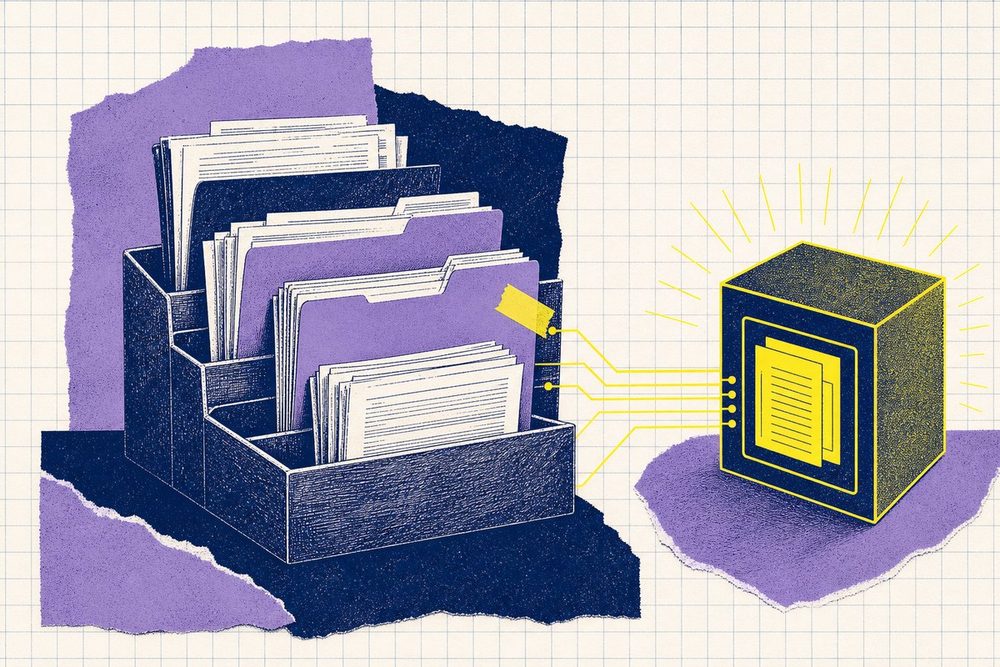
Integratome's core is a Bayesian network, a type of probabilistic model in which nodes stand for risk factors, test results and diseases, and the links between them carry probabilities. De Kerviler compared it to a mind map, and then to a GPS: the map of the body is fixed, and the patient's data changes the recommended route. In the interview he said the map covered 57 chronic conditions and had just reached 60. The company's website, at the time of writing, lists more than 55 health themes and more than 1,000 calculation models.
The probabilities on those links come from published knowledge, such as epidemiology, guidelines from medical societies and national health records. In France, de Kerviler cited the SNDS, the national health insurance database. For a possible expansion to Japan, he cited the NDB, the national database of insurance claims and health checkups run by the Ministry of Health, Labour and Welfare.
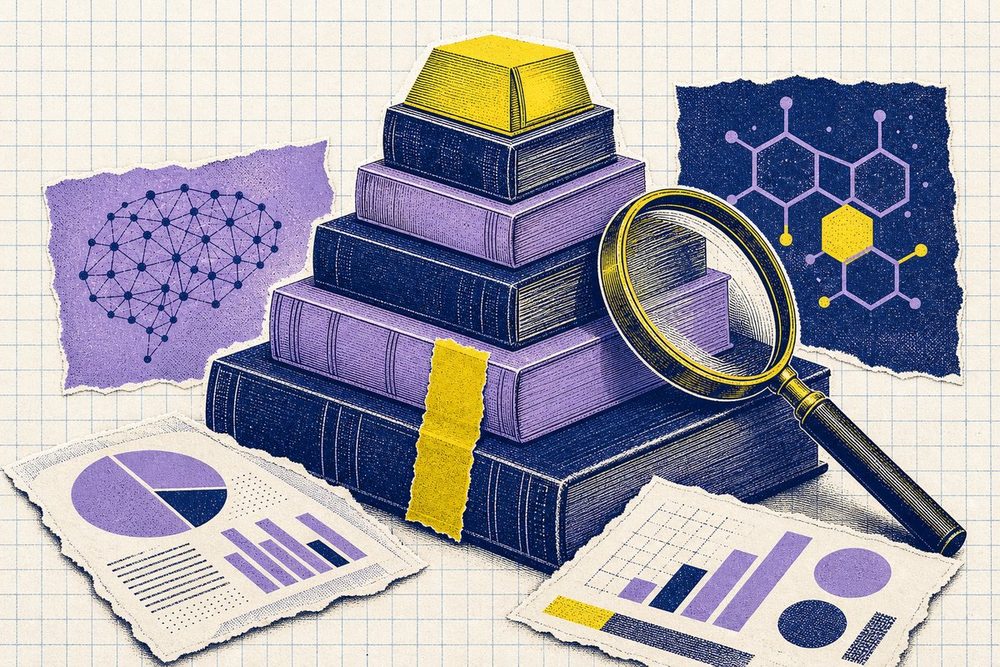
Generative AI enters at one step only, in his description. The company uses four large language models, which he did not name beyond calling them "the four biggest", to search and sort the literature for evidence on a specific link, for example between cholesterol and a given cancer. PubMed added more than 1.5 million citations in fiscal year 2023 alone, according to the US National Library of Medicine, and he presented this volume as the reason a machine is needed to filter it. Every piece of evidence that enters the model is then validated by the company's medical team and by a scientific committee of eleven physicians, six of them professors. The website describes the resulting system as symbolic AI: explicit rules that can be traced, a model that does not learn from individual patients' data and is updated only from validated literature.
What the doctor sees
The patient fills in a questionnaire of about fifteen minutes on medical history and lifestyle. The software compares the resulting twin with a reference profile for the same age and sex, shows where the person diverges, and lists what medical societies recommend in that situation. It then projects the profile five years ahead. De Kerviler said the five-year horizon was a scientific choice: long enough to show change, short enough to feel actionable. Physicians using the tool, he said, turn the screen towards the patient at that point. "Look, if you stop smoking," followed by the number of conditions affected.
The tool is sold to organisations, not to patients; Integratome has no patient app. It is in use at the Pôle Santé Bergère, a Paris health centre linked to the mutual insurance group Audiens, which in December 2025 announced a prevention check-up built on the twin, with lab tests run by Biogroup. De Kerviler said other clinics in France, Switzerland and Luxembourg were being equipped, and that pilots were under discussion with anaesthetists for pre-operative consultations.
Decision support or medical device
De Kerviler was explicit that Integratome is not a medical device, because it does not make a diagnosis and only contextualises information that any physician could look up. He also said the company was considering the medical device route, possibly in 2026, to go further towards diagnostic support.
The European framework makes this a question worth following. Under Article 2(1) of the Medical Device Regulation, software can be a medical device when its intended purpose includes the "prediction" or "prognosis" of disease, not only diagnosis. Whether a given tool qualifies depends on its intended purpose and how it is presented, which is assessed case by case.
Two readings follow. In the first, Integratome works like a structured reference library: the knowledge is public, the physician keeps every decision, and assembling it saves time that a doctor in a busy check-up centre does not have. The validation committee and the traceable model support that reading. In the second, a five-year individual risk projection that shapes referrals is close to what the regulation calls prediction, and the line drawn on diagnosis may not be the one that matters. Both readings agree that the physician remains in charge; they differ on how much the framing of the output weighs.
What the interview does not establish
The risk figures in the prostate example were presented as drawn from public sources, but the interview did not say which, and they could not be traced here. No outcome data was discussed: whether patients who see their projection change behaviour, or whether the referrals it suggests are appropriate, has not been published. A figure de Kerviler gave on the share of new publications that are wrong could not be sourced and is left out. The use of generative AI to extract evidence is described as tightly supervised, and the High Authority for Health's guide on generative AI, published in October 2025 and cited by de Kerviler, makes systematic human verification a condition of responsible use. How that verification scales as the literature grows is not documented publicly.
What to watch
Three developments would clarify the picture: a published validation comparing the twin's projections with observed outcomes, the company's decision on the medical device route, and whether doctors outside check-up centres, such as general practitioners, can access it through the integrations with practice software that de Kerviler described. Each would show whether augmented medicine, as he calls it, holds up once the model is asked to do more.
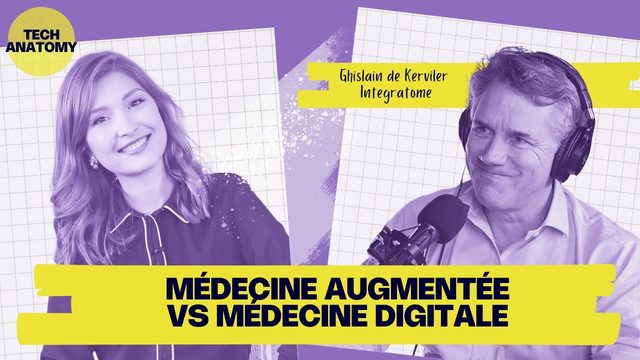
Médecine augmentée vs. Médecine digitale avec Ghislain de Kerviler, Integratome
Listen · 30 minSources
- Tech Anatomy, Médecine augmentée vs. médecine digitale, interview with Ghislain de Kerviler, Integratome (in French), published 24 February 2026.
- Integratome, about the founding team and methodology, integratome.com
- Un « jumeau numérique » pour faciliter l'accès à la médecine préventive, Pourquoi Docteur, 17 December 2025
- MEDLINE/PubMed production statistics, US National Library of Medicine
- L'IA générative en santé : oui, avec un usage responsable, Haute Autorité de santé, 30 October 2025
- Regulation (EU) 2017/745 on medical devices, Article 2(1), EUR-Lex
- NDB, National Database of Health Insurance Claims and Specific Health Checkups of Japan, Ministry of Health, Labour and Welfare